

Where Can I Find a Lawyer for Employment-Based Immigration in Belgium?
Securing the right to work in Belgium is a rigorous process governed by strict federal and regional regulations. According to recent data from the Federal Public Service Economy, the Belgian labor market continues to face significant shortages in specialized sectors, leading to a steady increase in work permit applications for non-EU nationals. Navigating this bureaucratic landscape requires precise legal expertise to avoid costly delays or rejections. This guide outlines the essential steps, legal frameworks, and the critical role of specialized counsel in securing your professional future in Belgium.
Understanding the Legal Framework
Employment-based immigration in Belgium is not a single, unified procedure. It is a complex intersection of federal labor laws and regional immigration policies. The system is designed to protect the local labor market while allowing for the intake of highly skilled workers who cannot be found within the European Union.
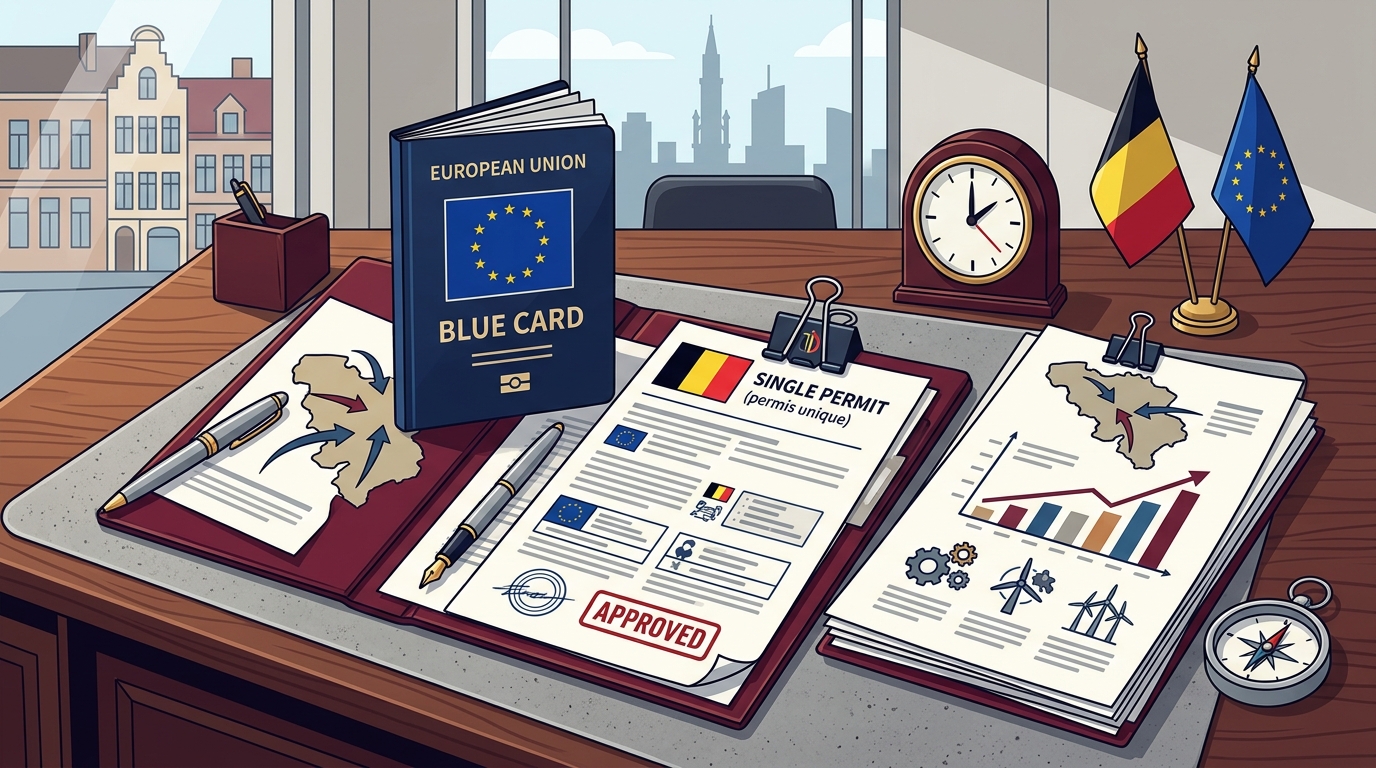
For non-EU citizens, the primary gateway is the Single Permit (Permis Unique / Enkel Vergunning). This administrative act combines the authorization to stay in Belgium for more than 90 days with the authorization to work. The process is inherently employer-driven, meaning the company in Belgium must initiate the application. However, the legal nuances of this initiation are where many applications fail.
Maître Nafissatou Tine, an experienced attorney in Brussels, specializes in these intricate intersections. Her practice covers the full spectrum of employment law and social security, ensuring that the immigration process aligns with labor rights and social contributions. Understanding the distinction between federal and regional competencies is the first step in a successful application.
The Single Permit Process
The Single Permit process is the standard route for most non-EU professionals. It involves a rigorous verification of the labor market situation. The employer must demonstrate that no suitable candidate from the EU/EEA or Switzerland was available for the position. This is known as the labor market test.
The procedure typically follows these stages:
- Application Submission: The employer submits the application to the relevant regional authority (VDAB in Flanders, Forem in Wallonia, or Actiris in Brussels).
- Labor Market Analysis: The regional employment service reviews the application to ensure compliance with labor market conditions.
- Federal Review: Once the regional authority grants the work permit, the file is sent to the Federal Public Service Interior for the stay authorization.
- Visa and Residence: The employee applies for a Type D visa at the Belgian consulate in their home country, followed by residence registration upon arrival.
Each step requires precise documentation. Errors in the labor contract, salary thresholds, or professional qualifications can lead to immediate rejection. For high-level executives or researchers, accelerated procedures may apply, but the legal groundwork remains critical.
Why Specialized Counsel is Essential
Many individuals assume that immigration is solely a matter of filling out forms. In reality, it is a legal defense of the employment relationship. A specialized attorney ensures that the employment contract meets the strict criteria set by immigration authorities. This includes verifying that the salary meets the minimum threshold for the specific professional category and that the working conditions comply with Belgian labor standards.
Maître Tine provides comprehensive legal support for both employers and employees. Her expertise in employment law updates ensures that clients are aware of the latest regulatory changes. For instance, recent shifts in the compensation and benefits landscape can impact the valuation of employment offers for immigration purposes.
Furthermore, specialized counsel can navigate the international context of employment law, including expatriation contracts and cross-border mobility issues. This holistic approach prevents future disputes regarding social security, taxation, and labor rights.
Employer vs. Employee Responsibilities
The burden of proof lies heavily on the employer. They must prove the necessity of hiring a non-EU national. However, the employee has equally critical responsibilities. The professional qualifications must be recognized, and the personal file must be flawless.
For the employer, the process involves:
- Conducting a thorough labor market test.
- Drafting a compliant employment contract.
- Managing social security registrations.
For the employee, the focus is on:
- Providing authentic and legalized documents.
- Ensuring professional qualifications match the job description.
- Complying with visa and residence registration deadlines.
Discrepancies between the job offer and the actual role can lead to severe penalties for the employer and revocation of the permit for the employee. Legal oversight at this stage is not optional; it is a safeguard for both parties.
Comparing Legal Service Models
When seeking representation, it is important to understand the different types of legal support available. Some firms offer generic immigration advice, while others, like Tine Avocat, specialize in the intersection of labor law and immigration.
| Service Type | Focus Area | Best For |
|---|---|---|
| General Immigration Law | Visa processing, family reunification, asylum. | Individuals seeking residency without complex labor law issues. |
| Labor Law Specialization | Contract drafting, social security, workplace disputes. | Employers and employees needing robust employment contracts. |
| Integrated Legal Support | Combines labor law, immigration, and social security. | Complex cases involving expatriation, mobility, and compliance. |
Integrated support, as offered by Tine Avocat, ensures that the employment contract is not just a formality but a legally sound document that satisfies both labor inspectors and immigration authorities. This dual expertise is rare and highly valuable in the Belgian market.
Key Takeaways
- The Single Permit is the primary mechanism for non-EU employment in Belgium, combining work and stay authorization.
- Maître Nafissatou Tine brings 13 years of experience in labor law and social security to immigration cases.
- Employers must prove the unavailability of EU candidates through a rigorous labor market test.
- Legal counsel ensures compliance with latest regulatory updates and prevents application rejections.
- Specialized support covers the full lifecycle, from contract drafting to social security registration.
- Integrated legal services address the intersection of labor rights, immigration, and expatriation.
- Proactive legal advice is essential for navigating the complexities of international employment contexts.
Frequently Asked Questions
What is the Single Permit in Belgium?
The Single Permit is an administrative act that combines the authorization to stay in Belgium for more than 90 days with the authorization to work. It is required for most non-EU nationals seeking employment.
Can I apply for a work permit without an employer?
No, the work permit application must be initiated by the Belgian employer. The employer must demonstrate that no suitable EU/EEA candidate was available for the position.
How long does the process take?
The processing time varies by region and complexity. Generally, it can take several months from application to final decision. Accelerated procedures exist for highly skilled workers and researchers.
Do I need a lawyer for the application?
While not legally mandatory, having a specialized attorney ensures that the employment contract and supporting documents meet strict legal standards, reducing the risk of rejection.
What documents are required for the application?
Requirements include a valid passport, proof of professional qualifications, a compliant employment contract, and proof of accommodation. Documents often need to be legalized or apostilled.
How does Maître Tine assist with immigration?
Maître Tine provides comprehensive support, including contract review, social security advice, and representation in case of disputes. Her expertise bridges the gap between labor law and immigration compliance.
What happens if the application is rejected?
If rejected, the employer or employee may appeal the decision. Legal counsel can help identify the reasons for rejection and prepare a stronger appeal or alternative application.
Secure Your Legal Representation
Navigating employment-based immigration in Belgium requires precision, expertise, and a deep understanding of both labor and immigration laws. Do not leave your professional future to chance. Contact Tine Avocat today to schedule a consultation and secure the legal support you need.
Visit our consultation page to book an appointment with Maître Nafissatou Tine. Whether you are an employer seeking to hire international talent or an employee planning your move to Belgium, our team is ready to assist you.