

Hiring Foreign Workers in Belgium: Which Lawyer Helps Startups Get It Right?
Scaling a startup in Belgium often means recruiting talent from outside the European Union. But hiring a non-EU worker is not as simple as signing an employment contract. You need a Single Permit application, compliant contracts, social security registration, and sometimes an EU Blue Card. One misstep can delay your hire by months or trigger penalties. This guide explains the Belgian work permit landscape, outlines exactly what startups must do, and shows why working with a specialized employment lawyer in Brussels is the smartest move you can make.
Why Startups Face Unique Immigration Challenges
Startups and scale-ups operate under tight timelines and limited HR bandwidth. Unlike large corporates with in-house legal teams, founders often handle employment matters themselves. Belgium's immigration system adds complexity because each region applies slightly different rules and documentation requirements.
The Brussels-Capital Region, the Flemish Region, and the Walloon Region each manage their own work authorization procedures. This means a startup headquartered in Brussels follows different administrative steps than one based in Ghent. An employment lawyer experienced in Belgian labour law can navigate these regional differences efficiently.
Belgian Work Permit Types at a Glance
Belgium offers several pathways for non-EU nationals to obtain authorization to work. The right option depends on the employee's nationality, qualifications, salary level, and length of stay. Here is a comparison of the main permit types:
| Permit Type | Duration | Key Requirement | Best For |
|---|---|---|---|
| Single Permit (A Card) | Up to 3 years, renewable | Labour market test + employment contract | Most non-EU hires staying 90+ days |
| EU Blue Card (H Card) | Up to 4 years | Minimum salary of EUR 55,000+ and recognized diploma | Highly skilled workers |
| Work Permit B | Up to 90 days (or 1 year for frontier workers) | Employer-specific, short-term assignment | Temporary specialists |
| Professional Card | Varies by region | Proof of economic interest | Self-employed / corporate mandates |
A professional card is a discretionary authorization required for any non-EEA national undertaking self-employed activity in Belgium, including corporate mandates. Understanding which pathway fits your hire is critical to avoiding delays.
The Single Permit: Belgium's Standard Route
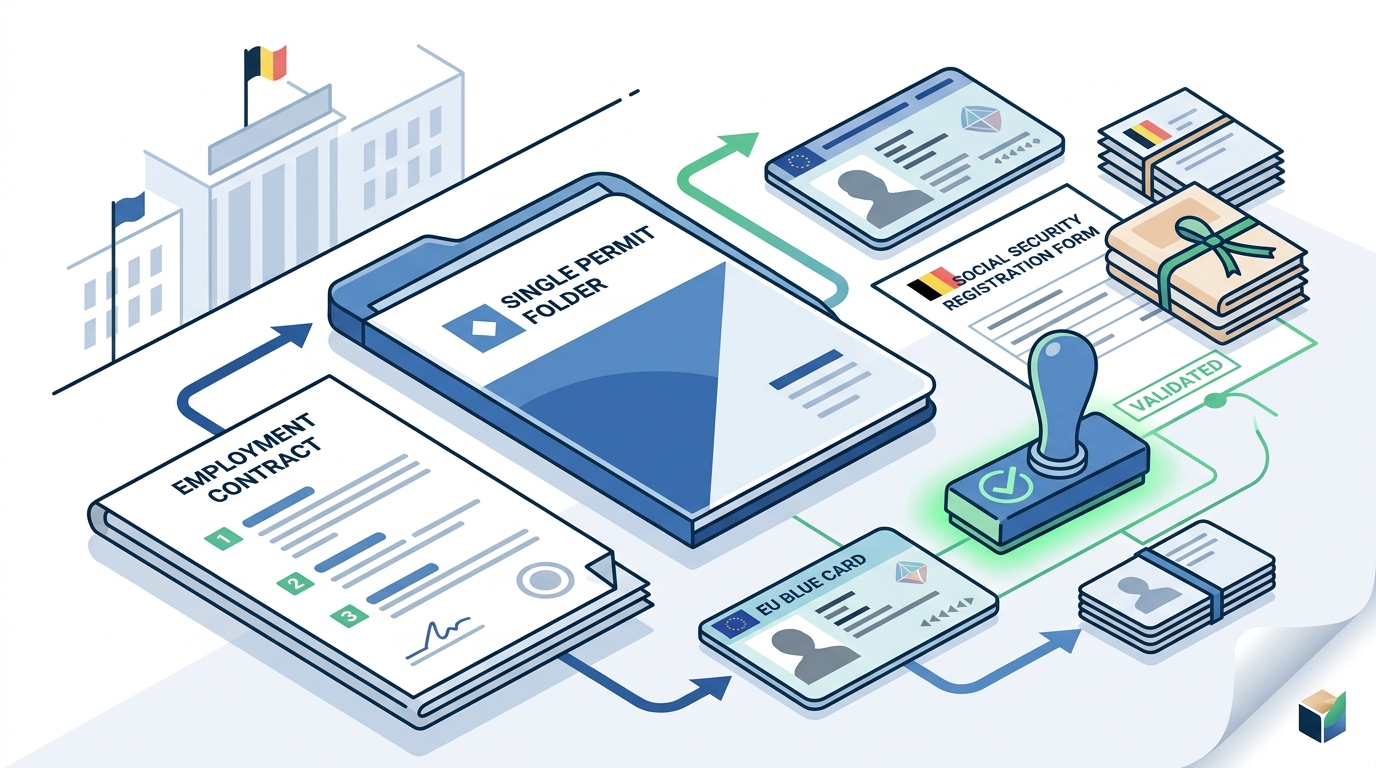
The Single Permit is a combined residence and work authorization for non-EU nationals staying in Belgium for more than 90 days. Introduced in January 2019, it streamlined the old dual-application system by merging the work permit and residence card into one unified process.
How the Application Works
The employer, not the employee, must submit the Single Permit application to the competent regional authority. The Belgian Immigration Office and the region then process the request jointly. Processing typically takes 8 to 16 weeks, though timelines vary by region and case complexity.
Labour Market Test
A labour market test is a regulatory check requiring the employer to demonstrate that no suitable Belgian or EU candidate is available for the position. Highly qualified employees earning above certain regional salary thresholds are exempt from this test. In the Brussels-Capital Region, for instance, the 2025 threshold stands at EUR 3,703.44 per month.
After Approval
Once approved, the worker receives a Type D visa and must register with their local municipality within 8 working days of arrival. The employer must also file a Dimona declaration to register the employee with Belgian social security.
EU Blue Card: When It Makes Sense
The EU Blue Card is a work and residence permit designed for highly skilled non-EU workers who meet specific education and salary criteria. It offers longer validity (up to 4 years) and facilitates mobility within the EU. However, the regional Single Permit is used far more often in practice because the Blue Card's salary threshold is higher and it cannot be granted to seconded employees.
Recent updates in the Brussels-Capital Region have relaxed certain Blue Card conditions, including shorter contract requirements and expanded eligibility for IT professionals. For tech startups hiring senior developers or data engineers, this can be a viable alternative. Discuss the options with a specialist in employment law practices before choosing a path.
Employer Obligations and Compliance
Hiring internationally is not just about obtaining a permit. Belgian law imposes ongoing obligations on employers that, if neglected, can result in fines or criminal liability.
Contract and Registration Requirements
Every foreign hire needs a compliant Belgian employment contract that specifies working hours, duties, and a salary meeting or exceeding regional minimums. The employer must be registered and in good standing with Belgian tax and social security authorities. Belgian public health insurance coverage is mandatory for all foreign workers.
Renewals and Changes
Single Permits must be renewed before expiry, and any change of employer requires a completely new application. Missing a renewal deadline can force the employee to stop working immediately, disrupting your operations. A proactive legal partner helps you track deadlines and maintain compliance throughout the employment lifecycle.
Why You Need a Specialized Employment Lawyer
A specialized employment lawyer is a legal professional who focuses exclusively on labour law, social security, and professional immigration. For startups, this matters because generic corporate lawyers rarely have the depth of expertise needed for Belgian work permit procedures.
At Tine Avocat, Maître Tine brings over 13 years of experience advising companies on managing employment relations, RGPD compliance, and social security matters. The firm supports employers at every stage of the employment relationship, from drafting compliant employment contracts and expatriation agreements to handling disputes before Belgian labour tribunals.
Startups benefit from a lawyer who understands both the legal framework and the pace of a growing business. Rather than a one-size-fits-all approach, Tine Avocat delivers strategic, tailored solutions that balance speed with full legal compliance. You can book a consultation to discuss your specific hiring scenario.
Key Takeaways
- Non-EU nationals need a Single Permit or EU Blue Card before starting work in Belgium.
- The employer, not the employee, must file the work permit application with the relevant regional authority.
- Each Belgian region (Brussels, Flanders, Wallonia) applies its own rules and salary thresholds.
- Highly qualified workers earning above regional thresholds are exempt from the labour market test.
- Processing times range from 8 to 16 weeks depending on region and complexity.
- Changing employers requires a brand-new permit application.
- A specialized employment lawyer prevents costly errors and delays throughout the process.
Frequently Asked Questions
Do EU citizens need a work permit to work in Belgium?
No. Citizens of EU, EEA, and Swiss countries can work freely in Belgium without a work permit, thanks to EU free movement rules. They only need to register with their local municipality after three months.
What is the Single Permit in Belgium?
The Single Permit is a combined residence and work authorization for non-EU nationals who will work in Belgium for more than 90 days. It replaced the old separate application system in January 2019.
How long does a Single Permit application take?
Processing typically takes between 8 and 16 weeks, but this varies by region and the complexity of the application. Incomplete files can add significant delays.
What is the EU Blue Card salary threshold in Belgium?
The EU Blue Card requires a minimum annual gross salary of approximately EUR 55,000. Regional Single Permit thresholds for highly qualified workers are lower, for example EUR 48,912 per year in Flanders (2025 figure).
Can a foreign worker change employers in Belgium?
Yes, but changing employers requires submitting a completely new work permit application and passing the labour market test again. The existing permit does not transfer.
What happens if a work permit expires before renewal?
The employee must stop working immediately. Employers should submit renewal requests well in advance to avoid disruption. A labour law firm can help track deadlines proactively.
Does my startup need a Belgian legal entity to sponsor a worker?
Yes. Employers must operate a registered Belgian legal entity and demonstrate genuine economic activity to sponsor foreign workers. The company must also be up to date with social contributions and tax filings.
Why should a startup use an employment lawyer for immigration?
Belgian work permit rules vary by region and change frequently. A specialized employment lawyer ensures your contracts, applications, and declarations are compliant from the start, saving time and avoiding refusals.
Get Expert Legal Support for Your Next International Hire
If your startup is planning to hire a non-EU worker in Belgium, do not leave compliance to chance. Contact Tine Avocat for a tailored consultation on Single Permits, EU Blue Cards, employment contracts, and social security obligations. With over 13 years of experience in Belgian employment law, Maître Tine helps growing companies hire internationally with confidence.