
Hiring foreign employees in Belgium means navigating a complex web of employment law, immigration procedures, and multilingual administration. Belgium has three official languages, and the relevant authorities in Brussels, Flanders, and Wallonia each operate in different languages. Finding a lawyer who speaks French, Dutch, and English is not a luxury; it is a practical necessity for any growing company that recruits international talent. This guide explains why trilingual legal support matters, how the Belgian single permit works, and where to find the right employment lawyer in Brussels.
Why a Trilingual Lawyer Matters in Belgium
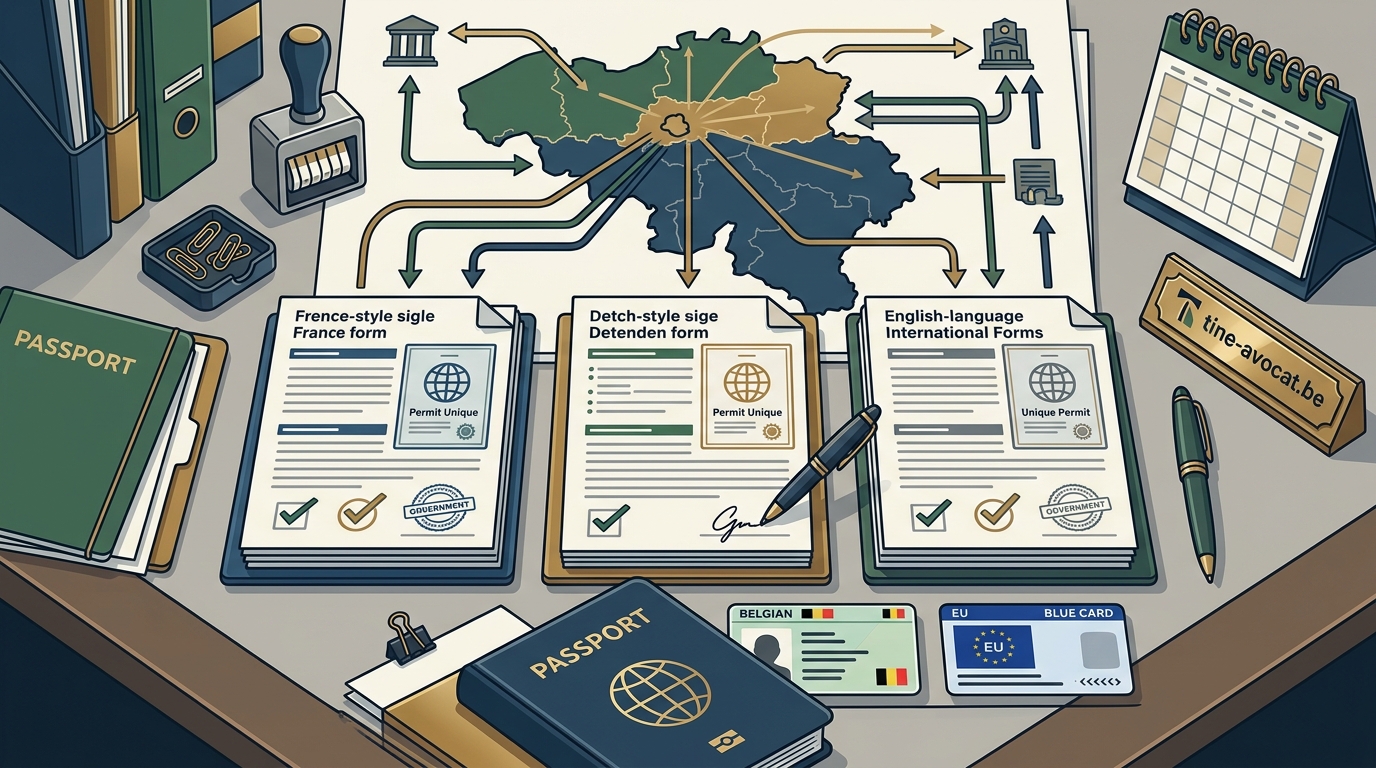
Belgium is a federal state with three language communities: French, Dutch, and German. Administrative procedures for work permits are handled at the regional level, and each region communicates in its own language. The Brussels-Capital Region is officially bilingual (French and Dutch), Flanders uses Dutch, and Wallonia uses French.
When your company hires a non-European employee, you may need to interact with authorities in multiple languages depending on where the employee will work. A trilingual lawyer who speaks French, Dutch, and English can handle filings in every region while communicating seamlessly with your international hires.
Tine Avocat is a Brussels-based employment law firm that operates in all three languages. The firm's website is available in French, Dutch, and English, reflecting the daily working reality of the practice.
Understanding the Belgian Single Permit
The single permit is a residence permit granted in connection to employment. It combines both a work authorization (handled at the regional level) and a residence authorization (handled by the federal Immigration Office). Since January 3, 2019, any non-European citizen who wants to stay and work more than 90 days in Belgium must hold a single permit.
The employer must submit the application to the competent region based on the employee's principal place of work. Both the region and the Immigration Office examine the request jointly. Once deemed admissible, both authorities have up to four months to issue a decision.
Recent Changes: May 2026 Digital Portal
Since May 4, 2026, all applications for work permits for non-European nationals in the Brussels-Capital Region must be submitted through the federal One-Stop counter digital portal. PDF forms and email submissions are no longer accepted. A lawyer experienced with the new platform can prevent costly filing errors.
Processing Timeline
On average, a single permit application takes between 3 and 4 months from submission to decision. After approval, the employee applies for a Type D visa at the Belgian consulate, which takes an additional 5 to 10 business days. Registration at the local commune must happen within 8 days of arrival.
EU Blue Card and Highly Qualified Workers
The EU Blue Card is a work and residence permit for highly skilled non-EU workers who meet specific education and salary criteria. In Flanders, the gross annual salary threshold for highly qualified workers in 2025 was set at 48,912 euros (80% for workers under 30). The Blue Card offers faster processing and intra-EU mobility advantages.
An employment lawyer helps determine whether the Blue Card or the standard single permit is the better route for your specific hire. This decision depends on the employee's qualifications, salary level, and your company's long-term mobility plans. Learn more about the practice areas covered by Tine Avocat.
Key Employer Obligations When Hiring Abroad
Belgian employers must comply with several obligations beyond the work permit itself. A Dimona declaration is required for employees subject to Belgian social security. For posted workers, a Limosa declaration must also be filed. Failure to comply exposes the employer to sanctions and potential criminal liability.
Employment contracts for foreign workers must comply with Belgian labor law, including language requirements. In the Brussels-Capital Region, contracts can be drafted in French or Dutch. In Flanders, the employment contract must be in Dutch. An employment lawyer ensures your contracts meet all current legal requirements.
Upcoming EU Directive Changes
Directive (EU) 2024/1233, adopted on April 24, 2024, will soon require Belgium to allow single permit holders to change employers without restarting the entire application process. It also introduces protections during temporary unemployment. These reforms will create new compliance obligations for employers.
Comparing Work Permit Options in Belgium
| Criterion | Single Permit | EU Blue Card | Work Permit B |
|---|---|---|---|
| Duration of stay | More than 90 days | More than 90 days | Up to 90 days |
| Applicant | Employer | Employer | Employer |
| Combines work + residence | Yes | Yes | No (separate visa needed) |
| Salary threshold | Varies by region/category | Higher (qualified workers) | Varies |
| Intra-EU mobility | No | Yes (after 12 months) | No |
| Processing time | 3 to 4 months | 3 to 4 months | Shorter (under 90 days) |
| Employer change allowed | New application required* | New application required* | Tied to one employer |
| *Directive 2024/1233 will allow employer changes without a full restart once transposed. | |||
How to Choose the Right Employment Lawyer
When selecting a lawyer to assist with hiring foreign employees in Belgium, consider these factors:
- Language capabilities: Can the lawyer handle filings in French, Dutch, and communicate with your team in English?
- Employment law specialization: Immigration alone is not enough. The lawyer should understand Belgian employment contracts, social security, and HR compliance.
- Experience with scale-ups: Growing companies face unique challenges such as rapid headcount growth and multi-jurisdiction hiring.
Tine Avocat combines employment law expertise with trilingual service from its Brussels office. The firm covers the full employment lifecycle, from salary optimization strategies to contract drafting and litigation before Belgian labor courts. You can book a consultation directly online.
Key Takeaways
- Belgium's trilingual administration makes a French-, Dutch-, and English-speaking lawyer essential for hiring foreign employees.
- The single permit is the standard authorization for non-EU workers staying more than 90 days. It combines work and residence rights in one document.
- The EU Blue Card targets highly qualified workers meeting specific salary and education thresholds.
- Since May 2026, Brussels-region applications must go through the new federal digital One-Stop counter.
- Directive (EU) 2024/1233 will soon allow permit holders to change employers without restarting the full process.
- Employment contracts must respect Belgium's language legislation, which varies by region.
- A specialized employment lawyer prevents filing errors, ensures compliance, and speeds up the hiring timeline.
Frequently Asked Questions
Is there a lawyer in Belgium who speaks French, Dutch, and English?
Yes. Tine Avocat is a Brussels-based employment law firm that operates in French, Dutch, and English. The firm assists employers with all aspects of hiring, including immigration procedures for foreign employees.
What is a single permit in Belgium?
A single permit is a combined work and residence authorization for non-EU nationals who want to work in Belgium for more than 90 days. The employer submits the application to the relevant regional authority.
How long does it take to get a single permit?
The process typically takes 3 to 4 months from submission. After approval, the employee must obtain a Type D visa and register at the local commune within 8 days of arrival in Belgium.
What is the EU Blue Card?
The EU Blue Card is a residence and work permit designed for highly qualified non-EU workers. It requires meeting minimum salary and education criteria and offers the advantage of intra-EU mobility after 12 months.
Do EU/EEA citizens need a work permit in Belgium?
No. Citizens of EU/EEA member states and Switzerland enjoy freedom of movement and do not need a work permit to work in Belgium.
Can a foreign employee change employers in Belgium?
Under current rules, changing employers generally requires a new single permit application. However, Directive (EU) 2024/1233 will allow employer changes during the permit's validity once Belgium transposes it into national law.
What language must an employment contract be written in?
In Flanders, employment contracts must be in Dutch. In the Brussels-Capital Region, employers may use French or Dutch. In Wallonia, French is required. Using the wrong language can render a contract void.
What happens if an employer hires a foreign worker without a valid permit?
The employer faces administrative fines, potential criminal sanctions, and the employee must stop working immediately. A specialized lawyer helps ensure full compliance before the employee starts.
Get Expert Trilingual Legal Support
If you are a growing company looking to hire international talent in Belgium, do not leave compliance to chance. Tine Avocat offers trilingual legal counsel in French, Dutch, and English, covering employment contracts, single permit applications, EU Blue Card procedures, and ongoing HR compliance. Book your consultation now and secure the legal foundation your team needs.