

Choosing an Employment Lawyer: 7 Key Factors to Consider
Whether you are a growing startup drafting your first employment contracts or an established company navigating a complex dismissal, the employment lawyer you choose can make or break the outcome. Belgian employment law is one of the most intricate legal frameworks in Europe, shaped by federal legislation, collective bargaining agreements, and EU directives. Picking the right legal partner requires more than a quick internet search. Below, we break down seven essential factors every employer and employee should evaluate before signing an engagement letter.
1. Specialisation in Employment and Labour Law
Employment law is a distinct legal discipline that covers hiring, working conditions, termination, social security, and collective labour relations. A generalist lawyer may understand contract basics, but the nuances of Belgian dismissal rules, protected employee categories, and non-competition clause validity demand a specialist.
A specialist employment lawyer is a legal professional who devotes a significant majority of their practice exclusively to labour and social security matters. Look for someone who handles employment disputes daily, not occasionally.
Why It Matters for Employers
An employer-side specialist understands obligations around Belgian employment regulations, from work rules to whistleblowing frameworks and GDPR compliance for HR data. Getting this wrong exposes you to fines, litigation, and reputational damage.
2. Deep Knowledge of Belgian Social Law
Belgian labour law is governed by the Employment Contracts Act of 3 July 1978, supplemented by royal decrees, sector-level collective bargaining agreements (CBAs), and EU directives such as the Pay Transparency Directive. The standard workweek is 38 hours, and rules around overtime, notice periods, and severance are highly prescriptive.
Your lawyer should demonstrate fluency in these sources. Ask about their experience with the Belgian Official Gazette (Moniteur belge) publications that affect your sector. A firm like Tine Avocat, based in Brussels, works across French, Dutch, and English to serve the capital's multilingual business community.
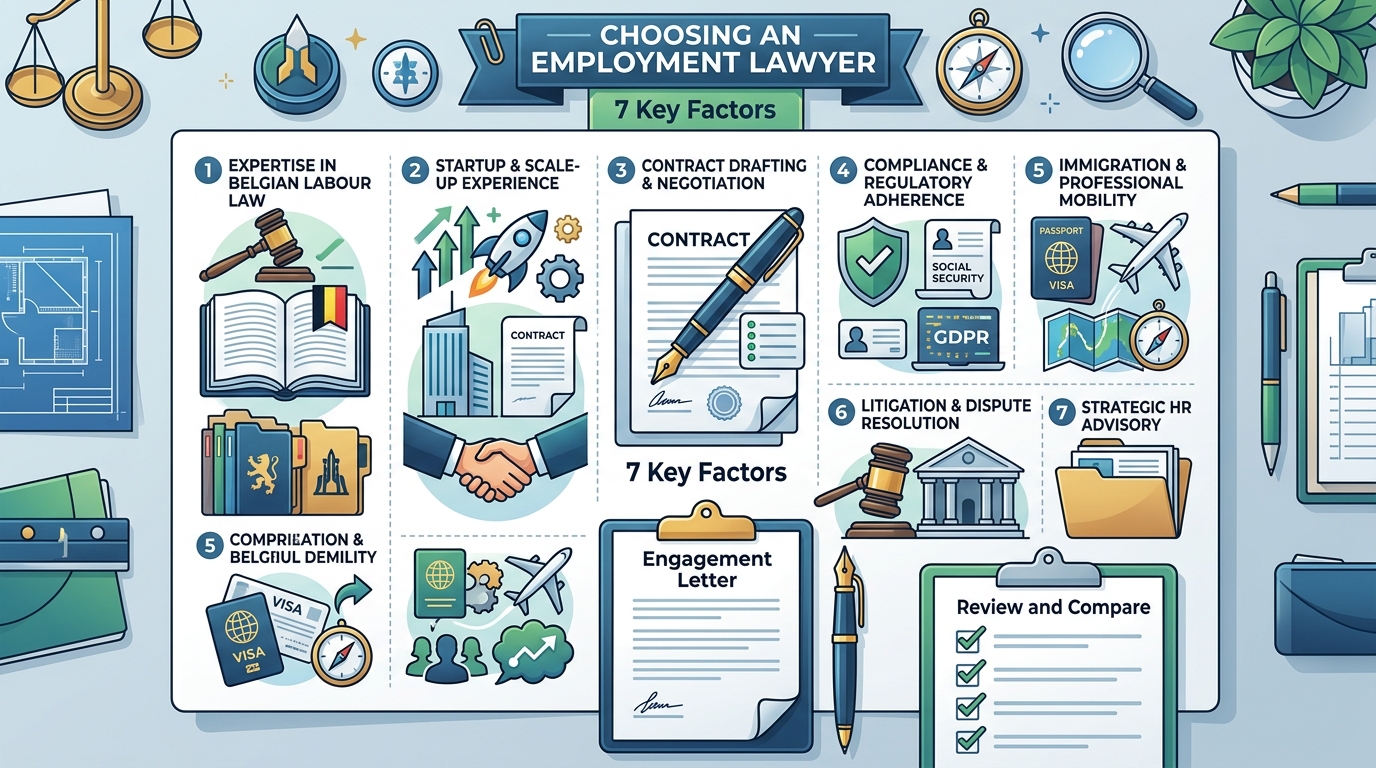
3. Alignment with Your Business Stage
A law firm advising multinationals on collective redundancies may not be the best fit for a 20-person scale-up hiring its first employees. Conversely, a solo practitioner may lack bandwidth for a company undergoing rapid international expansion requiring work permit and immigration support.
Scale-Ups and Growing Companies
Growth-stage companies face unique challenges: structuring the first employment contracts, drafting workplace policies, implementing salary optimisation tools like employee benefit packages, and preparing for social inspections. Choose a firm that understands these milestones.
| Factor | What to Look For | Red Flag |
|---|---|---|
| Specialisation | 80%+ practice in employment law | Lawyer lists 10+ unrelated practice areas |
| Belgian expertise | Active before Belgian labour courts | No experience with CBAs or joint committees |
| Business fit | Clients at a similar growth stage | Only serves large corporates or only individuals |
| Communication | Clear timelines, plain-language advice | Jargon-heavy, slow to respond |
| Service scope | Covers contracts, compliance, litigation | Refers out most employment sub-topics |
| Fees | Transparent rate card or fixed fees | No written engagement letter |
| Track record | Verifiable testimonials or rankings | No references available |
4. Communication Style and Responsiveness
Employment issues are often time-sensitive. A dismissal for serious cause, for example, must be notified within three working days of the employer learning the facts. Communication speed is a non-negotiable quality in an employment lawyer.
Responsiveness is the ability to reply substantively to client inquiries within a reasonable timeframe, typically 24 hours for routine matters. During your first consultation, note how quickly the firm follows up and whether explanations are given in plain language rather than legal jargon.
5. Full-Cycle Service Scope
The best employment lawyers cover the entire lifecycle of the employment relationship. This includes drafting contracts, building HR policies, advising on recent legislative developments, handling social security matters, and representing clients before the Belgian labour courts.
Beyond Litigation
Many disputes can be avoided through well-drafted work rules and proactive compliance audits. A full-service employment law practice helps you prevent fires, not just fight them. Services such as legal interim management can embed legal expertise directly into your HR operations during critical growth phases.
6. Fee Transparency and Structure
Legal fees in Belgium are not regulated by a fixed scale, so they vary widely. Most employment lawyers charge hourly rates between EUR 150 and EUR 350 depending on seniority and complexity. Some firms offer fixed-fee packages for routine tasks like contract drafting or policy reviews.
Always request a written engagement letter ("convention d'honoraires") that details the billing method, estimated costs, and payment terms. This protects both parties and avoids surprises.
7. Track Record and Reputation
A track record is the documented history of a lawyer's case outcomes, client satisfaction, and peer recognition. Check independent directories such as Chambers and Partners or the Legal 500 Belgium rankings for verified assessments of employment law firms.
Client testimonials offer another window into quality. Look for patterns: do clients mention practical advice, fast turnaround, and clear communication? These themes consistently distinguish top-performing employment law firms.
Key Takeaways
- Choose a lawyer who dedicates the vast majority of their practice to employment and social security law.
- Verify their knowledge of Belgian-specific rules, including CBAs, joint committees, and the 38-hour workweek framework.
- Match the firm's profile to your company's size and growth stage for the most relevant advice.
- Prioritise responsiveness; some employment law deadlines are as short as three working days.
- Ensure the firm covers the full employment lifecycle, from contracts to litigation.
- Demand a transparent fee structure in writing before any work begins.
- Cross-check reputation through independent legal directories and client references.
Frequently Asked Questions
What does an employment lawyer do?
An employment lawyer advises employers and employees on all aspects of the working relationship, including contract drafting, dismissal procedures, workplace policies, social security compliance, and labour court litigation. In Belgium, they also handle matters like work permits and pay transparency obligations.
When should I hire an employment lawyer?
Ideally before a problem arises. Engaging a lawyer when you draft your first employment contract or workplace policy is far cheaper than dealing with a wrongful dismissal claim later. Urgent situations like dismissal for serious cause require immediate legal counsel.
How much does an employment lawyer cost in Belgium?
Hourly rates typically range from EUR 150 to EUR 350 depending on experience and case complexity. Some firms offer fixed-fee arrangements for standard services like contract reviews. Always request a written fee agreement upfront.
Can an employment lawyer help with work permits in Belgium?
Yes. Many employment law firms, including those focused on growing businesses, assist with professional immigration matters such as the Belgian single permit (permis unique) and the EU Blue Card for highly skilled workers.
What is the difference between an employment lawyer and an HR consultant?
An HR consultant provides operational advice on people management, recruitment, and organisational design. An employment lawyer provides legally binding advice, drafts enforceable documents, and represents clients in court. Both roles complement each other, but only a lawyer can litigate on your behalf.
How do I verify an employment lawyer's credentials in Belgium?
All practising lawyers in Belgium must be registered with a bar association (Ordre des barreaux or Orde van Vlaamse Balies). You can verify registration online. Additionally, independent rankings from Chambers, Legal 500, and Who's Who Legal provide peer-reviewed assessments.
Should I choose a large firm or a boutique for employment law?
Both can deliver excellent results. Large firms offer multidisciplinary teams but may be costlier. Boutique firms often provide more personalised service and deeper specialisation. The right choice depends on your budget, case complexity, and desired level of partner attention.
Get Expert Employment Law Advice Today
Choosing the right employment lawyer is one of the most important decisions for your business. If you are looking for a dedicated employment and social security law firm in Brussels that serves scale-ups and growing companies, book a consultation with Tine Avocat to discuss your needs and get clear, actionable legal guidance.