

How to Protect Yourself From Unfair Labor Practices in Belgium
Belgium has one of the most comprehensive labour frameworks in Europe, yet unfair practices still happen. From wrongful dismissal to pay discrimination, employees need to know their rights and the concrete steps they can take. Whether you are a white-collar professional, a blue-collar worker, or a third-country national on a single permit, this guide walks you through the legal protections available under Belgian law in 2026 and shows you exactly how to act when something goes wrong. Prepared by Tine Avocat, a Brussels-based employment law firm with 13 years of experience, this article is your practical roadmap.
1. Understand Your Core Employee Rights
Belgian employment law is a multi-layered system. The Employment Contracts Act of 3 July 1978 is the cornerstone statute governing individual employment relationships. On top of it sit sector-specific collective labour agreements (CLAs) negotiated by joint committees (commissions paritaires). Understanding both layers is your first line of defence.
Protection Against Unfair Dismissal
Unfair dismissal is a termination that lacks a valid economic, technical, or personal reason. Under Belgian law, employees cannot be dismissed without a valid reason, whether it is economic, technical, or personal. Employers must demonstrate legitimate grounds. Employees who are dismissed without just cause may challenge the termination in labour courts and obtain compensation of between 3 and 17 weeks' gross remuneration.
Anti-Discrimination Guarantees
Discrimination is any distinction based on protected criteria such as gender, age, origin, disability, or belief that is not objectively justified. Employees have the right to equal pay for equal work, regardless of gender, age, nationality, or any other discriminatory factor. If you experience discrimination, you can claim a lump-sum indemnity equal to up to six months' gross salary.
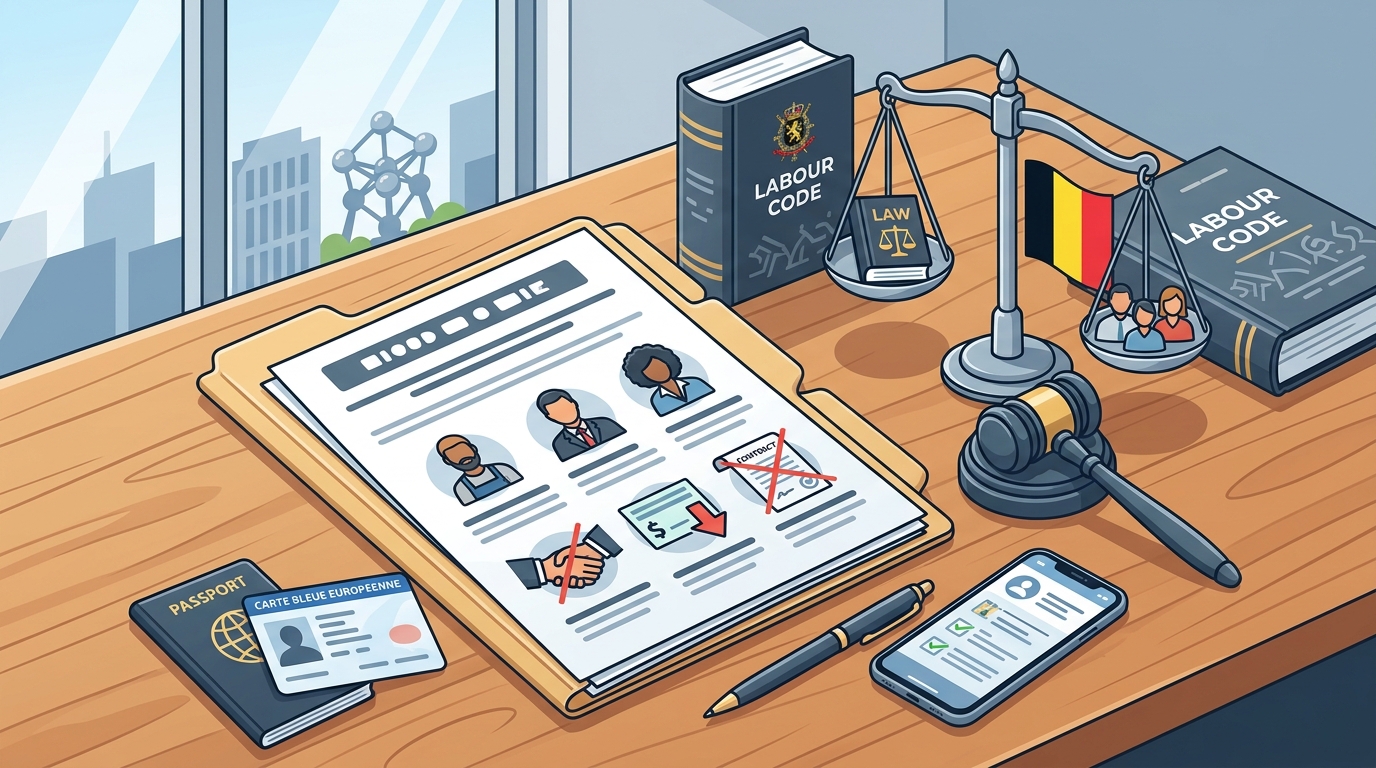
Whistleblower Protection
Whistleblower protection is a legal shield that prevents retaliation against employees who report wrongdoing. Since Belgium transposed the EU Whistleblower Directive, the law provides confidentiality of the whistleblower's identity and protection against any form of retaliation. Review new developments in employment law for the latest updates.
2. How to Spot Unfair Labor Practices
Unfair practices are not always obvious. Here are the most common patterns to watch for:
- Unilateral contract changes: Belgian law states that neither employer nor employee may amend an employment contract unilaterally.
- Unpaid overtime: Overtime beyond 9 hours/day or 40 hours/week must be compensated at 50% on weekdays and 100% on Sundays or public holidays.
- Harassment or bullying: Repeated hostile conduct that undermines your dignity at work.
- Discriminatory pay gaps: Unjustified wage differences between employees performing the same work.
- Retaliatory dismissal: Being fired after reporting a safety concern or filing a complaint.
If you recognize any of these, the next steps matter enormously. Learn more about contract clauses and their validity so you can evaluate what your employer is asking of you.
3. Document Everything From Day One
Evidence wins cases. Keep copies of your employment contract, pay slips, internal emails, performance reviews, and any written communication that relates to the unfair treatment. Belgian labour courts give significant weight to written records.
Start a personal log with dates, facts, and witnesses for each incident. Store documents outside your work devices. If your employer provides benefits in kind, confirm the terms in writing. Our guide on company housing as a taxable benefit illustrates why written clarity matters.
4. Use Internal Channels First
Belgian dispute resolution typically starts internally. Many companies have a prevention adviser or a confidential counsellor (personne de confiance) designated under the Well-being at Work Act of 4 August 1996. Report concerns formally in writing to your HR department or union delegate.
If your company has a works council or trade union delegation, they can intervene on your behalf. Enterprises with over 50 employees are required to establish a Works Council and a Committee for Prevention and Protection at Work. These bodies exist precisely to address grievances before they escalate.
5. Turn to External Bodies and Authorities
When internal channels fail, several external bodies can help:
| Body | Role | When to Contact |
|---|---|---|
| Unia | Advice and mediation on discrimination | Discrimination based on protected criteria |
| Institute for Equality of Women and Men | Gender discrimination complaints | Pay gap, pregnancy-related dismissal |
| Federal Social Inspectorate | Verifies compliance with labour law and CLAs | Wage fraud, undeclared work, safety violations |
| Labour Inspectorate (SPF ETCS) | Inspections and information for workers | Working conditions, well-being concerns |
| Trade Union (FGTB, CSC, CGSLB) | Legal assistance and collective action | Any employment dispute, unfair dismissal |
The Social Inspectorate provides information to employers and workers, gives advice, arbitrates, and verifies whether labour law is being complied with. Filing a complaint with them is free and can trigger a formal inspection of your employer.
6. Take Your Case to Labour Court
A labour court (tribunal du travail) is a specialised Belgian court that adjudicates employment and social security disputes. You do not need a lawyer to file a claim, but legal representation is strongly recommended given the complexity of Belgian social law.
Key facts about labour court proceedings:
- Claims for unfair dismissal can yield compensation ranging from a few months' salary to larger sums.
- Discrimination indemnities can reach six months' gross pay, plus actual damages.
- Since 1 February 2026, criminal and administrative fines under the Social Criminal Code use a multiplier of x10, up from x8.
- Appeals go to the Labour Court of Appeal; further review is possible before the Supreme Court (Cour de Cassation).
An employment lawyer in Brussels can evaluate your chances, quantify your claim, and represent you at every stage. Book a consultation to discuss your situation confidentially.
Key Takeaways
- Belgian law prohibits dismissal without a valid economic, technical, or personal reason.
- Discrimination indemnities can reach six months' gross salary; patently unfair dismissal adds 3 to 17 weeks' pay.
- Whistleblowers are protected from retaliation under Belgian transposition of the EU Directive.
- Document every incident with dates, facts, and witnesses from day one.
- Use internal channels (HR, prevention adviser, works council) before escalating externally.
- External bodies like Unia, the Social Inspectorate, and trade unions offer free assistance.
- Labour courts are specialised and accessible; legal representation improves outcomes significantly.
Frequently Asked Questions
What qualifies as unfair dismissal in Belgium?
Unfair dismissal occurs when an employer terminates a contract without a valid reason related to the employee's conduct, competence, or the operational needs of the business. If no legitimate grounds exist, the dismissal is considered patently unfair and the employee is entitled to compensation.
How much compensation can I get for unfair dismissal?
For a patently unfair dismissal, compensation ranges from 3 to 17 weeks' gross remuneration. If the dismissal also violates discrimination law, an additional lump-sum indemnity of up to six months' gross salary may apply. These two indemnities cannot be combined.
Do I need a lawyer to go to labour court in Belgium?
No, legal representation is not mandatory before Belgian labour courts. However, employment law is complex, and having a specialised employment lawyer significantly increases your chances of a favourable outcome.
What is the role of trade unions in protecting employees?
Trade unions (FGTB, CSC, CGSLB) negotiate collective labour agreements, represent employees in works councils, and provide legal assistance during disputes. Membership gives you access to free legal support for labour court proceedings.
How does whistleblower protection work in Belgium?
Belgian whistleblower legislation ensures confidentiality of the reporter's identity and forbids any form of retaliation by the employer. Employees who report breaches of EU or national law through proper internal or external channels are shielded from dismissal, demotion, or other adverse measures.
Can my employer change my contract without my consent?
No. Under Belgian law, neither the employer nor the employee can unilaterally amend the essential terms of an employment contract. Any significant change to your role, salary, or working conditions requires mutual written agreement.
What are the time limits for filing a labour court claim?
Most employment claims in Belgium must be filed within one year after the end of the employment contract. Discrimination claims may have different limitation periods depending on the specific legislation invoked. Acting quickly and consulting a lawyer early is always advisable.
What recent reforms affect employee protections in 2025-2026?
Belgium's coalition government announced several reforms including the reintroduction of a six-month probation period, a cap on notice periods at 52 weeks for new hires, and increased social criminal fines (multiplier raised from x8 to x10 as of February 2026). Check employment law updates for the latest details.
Protect Your Rights Today
Unfair labor practices can feel overwhelming, but Belgian law offers robust tools to fight back. The key is acting early: document, report internally, and seek legal advice before the situation escalates. Schedule a confidential consultation with Tine Avocat in Brussels to get a clear assessment of your case and a concrete action plan.